


When it comes to creating content, not all pieces are made the same. Some are short, quick, and easy to consume, while others are long, detailed, and packed with information. These differences are what separate short-form content from long-form content. Both types have their own benefits, and understanding when and how to use each can completely change the way your audience engages with your work.
Choosing the right format for the right situation can help you capture attention, build trust, and even drive more traffic to your site. In this article, we’ll break down the differences, advantages, and best uses for both short-form and long-form content so you can make smarter decisions for your content strategy.
Shall we start…
What Is Short-Form Content?
Short-form content is quick, easy to consume, and usually under 1,000 words. Examples include:
- Social media posts
- Blog posts of 500–800 words
- Quick guides or lists
- Short videos or reels
The goal of short-form content is to grab attention fast. It’s perfect for audiences with short attention spans or when you want to deliver a quick tip or update.
Pros of Short-Form Content:
- Easy and fast to create
- More shareable on social media
- Works well for announcements and trends
Cons:
- Limited depth
- Harder to rank for competitive keywords on search engines
- Less room to explain complex topics
Related article: How to Build a Content Strategy | From A to Z
What Is Long-Form Content?
Long-form content is in-depth and detailed, usually over 1,500 words. Examples include:
- Comprehensive blog posts
- Ebooks and guides
- Detailed tutorials
- Whitepapers or case studies
The goal of long-form content is to educate, inform, or convince the reader. It works well when you want to explain a topic thoroughly or provide value that keeps people on your site longer.
Pros of Long-Form Content:
- Builds authority and trust
- Improves SEO and search engine rankings
- Offers more value and detail
Cons:
- Takes longer to create
- Requires more research and effort
- Can be overwhelming for readers who prefer quick answers
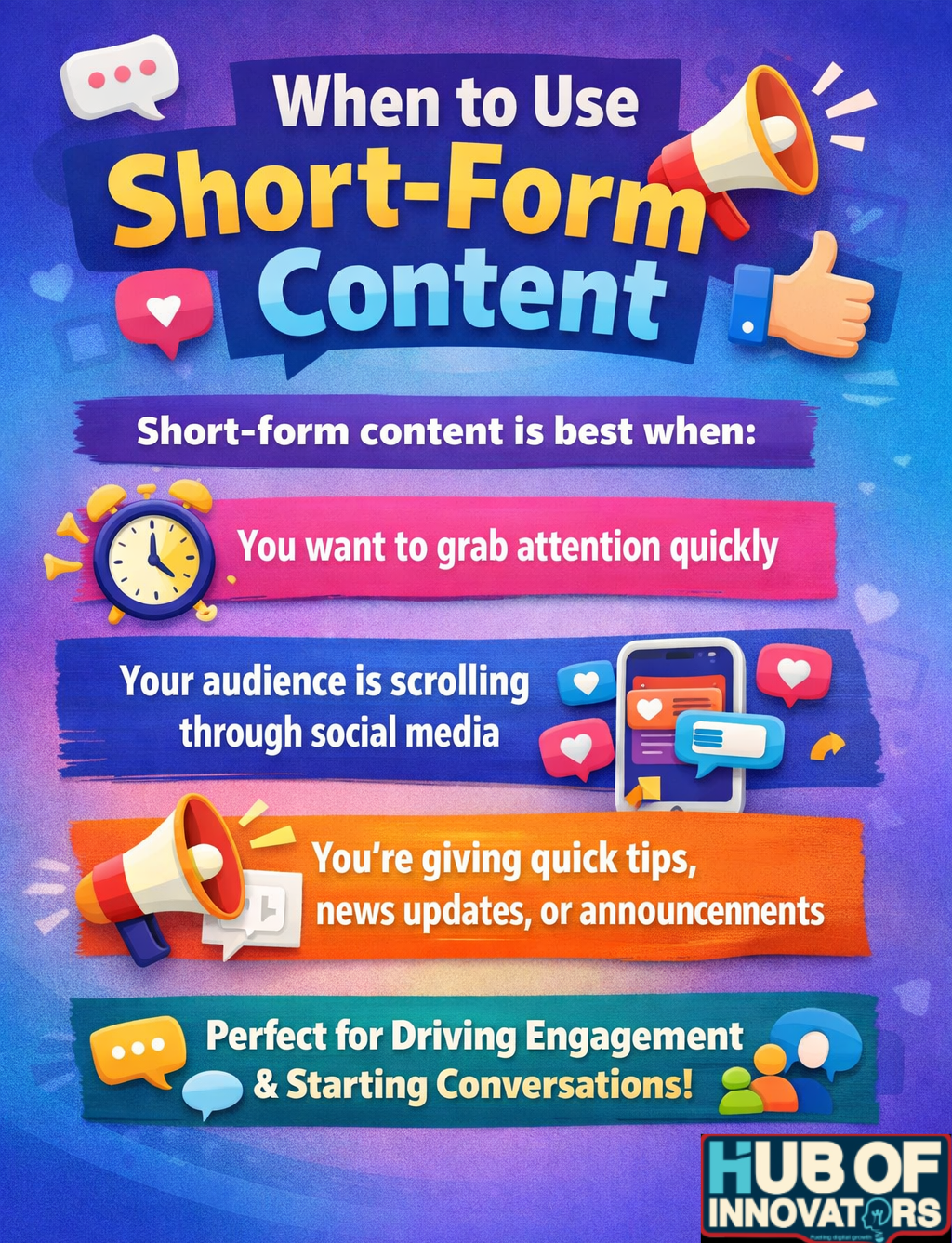
When to Use Short-Form Content
Short-form content is best when:
- You want to grab attention quickly
- Your audience is scrolling through social media
- You’re giving quick tips, news updates, or announcements
It’s also great for driving engagement and starting conversations without demanding too much time from your audience.
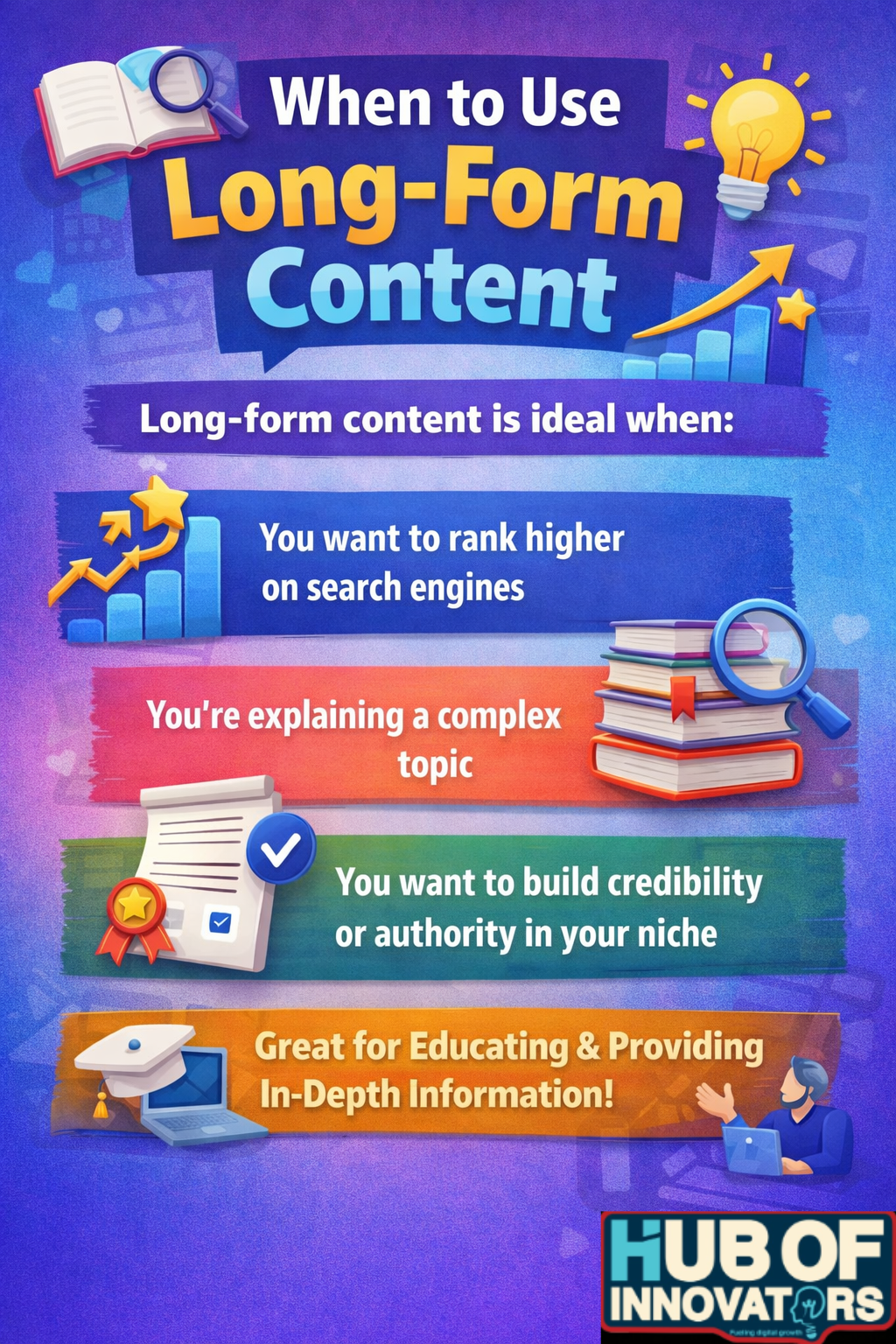
When to Use Long-Form Content
Long-form content is ideal when:
- You want to rank higher on search engines
- You’re explaining a complex topic
- You want to build credibility or authority in your niche
It’s also useful when your goal is to educate, generate leads, or give readers something they can return to as a reference.
Which One Is Better?
There’s no one-size-fits-all answer. Both types of content are important, and the best strategy usually combines both.
- Use short-form content to engage, entertain, and attract attention.
- Use long-form content to educate, build authority, and drive organic traffic over time.
Think of short-form content as the “hook” and long-form content as the “deep dive.” Together, they make your content strategy stronger.
Q&A About Short-Form vs Long-Form Content
1. Can I use both types of content together?
Yes! Many successful content strategies mix short and long content. Short content grabs attention, while long content builds authority and drives SEO.
2. Which one is better for SEO?
Long-form content usually performs better for SEO because it has more detail, more keywords, and keeps readers on your site longer.
3. Is short-form content useless for SEO?
Not at all. Short-form content is great for engagement, social shares, and reaching audiences who scroll quickly online. It can also support your long-form content strategy.
4. How often should I post each type?
It depends on your goals. Short-form content is good for frequent posting (daily or several times a week), while long-form content can be published less often (weekly or biweekly) but with more depth.
5. Can short-form content convert users into customers?
Yes, if it’s targeted and includes a clear call-to-action. Short content works well for quick tips, promotions, and building brand awareness.
6. Is long-form content only for blogs?
No, long-form content can be blog posts, guides, ebooks, video tutorials, or even detailed social media threads. Anything that dives deep into a topic counts.
conclusion
Short-form and long-form content each have their place. Short-form keeps your audience engaged and draws attention, while long-form builds trust, authority, and SEO value.
The key is balance. Use both strategically to keep your audience interested and give them real value. That way, you get both engagement and credibility.